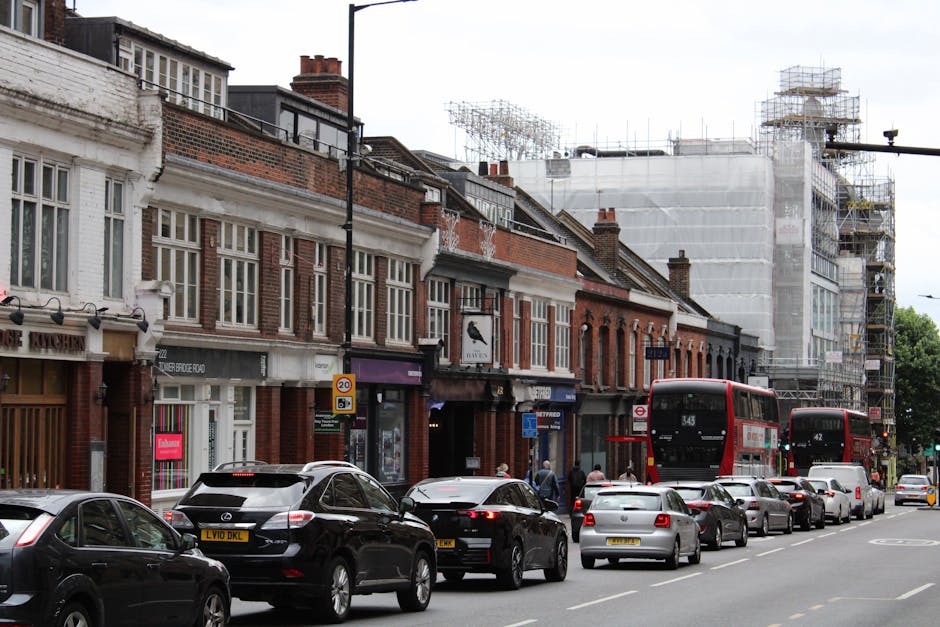
Small Flat Moves on Alexandra Avenue, Rayners Lane
Posted on 07/05/2026
Moving out of a small flat can look simple from the outside. Fewer rooms, fewer boxes, less to shift. But if you live on Alexandra Avenue in Rayners Lane, you already know the reality can be a bit more nuanced than that. Tight hallways, awkward stair turns, narrow parking spaces, and neighbours who are trying to get on with their day all shape how the move actually feels.
That is exactly why Small Flat Moves on Alexandra Avenue, Rayners Lane deserve proper planning. A compact move is not necessarily an easy one; it just has a different set of challenges. The good news is that with the right preparation, the right vehicle, and a sensible approach to packing and access, the whole thing becomes much calmer. In this guide, you will find practical advice on how these moves work, what to expect, where the common snags appear, and how to make the process smoother from start to finish.
Whether you are moving a studio, a one-bedroom flat, or a small shared property, this article will help you decide what to do yourself, what to leave to professionals, and how to avoid the little mistakes that often create the biggest headaches. Lets face it, the last thing anyone wants on moving day is a box of plates in one hand and nowhere legal to park in the other.
Why Small Flat Moves on Alexandra Avenue, Rayners Lane Matters
Small flat moves are often underestimated because the volume of belongings is lower than a full house move. But the local context matters a lot. Alexandra Avenue, like many residential roads in Rayners Lane, can involve shared access, limited stopping space, and a rhythm of daily traffic that you need to work around. A move that looks easy on paper can become stressful very quickly if access is not thought through.
For small flat moves, efficiency is everything. You are usually dealing with a concentrated set of items: a bed, a wardrobe, a sofa, boxes, kitchen gear, maybe a TV, and a few fragile items that somehow always multiply the night before the move. The main challenge is not quantity, it is coordination. Timing, packing order, and vehicle positioning all make a real difference.
This is also where local knowledge helps. If you are arranging a move near busy transport corridors or close to areas where parking can be tight, good route planning matters just as much as good packing. Our guide on moving near Rayners Lane Station, including routes and parking tips is a useful companion read if access is likely to be a challenge.
In short, a small flat move is often about reducing friction. Fewer trips. Less lifting. Cleaner handovers. Less chance of damaging walls, stair rails, or the things you actually care about. Simple, really - but only if it is organised properly.
How Small Flat Moves on Alexandra Avenue, Rayners Lane Works
A well-run small flat move usually follows a clear pattern. First comes the assessment: what needs moving, what can be dismantled, what is fragile, and what might be too awkward for a quick lift. Then comes the packing and load plan. After that, the actual move is a matter of moving items in the right sequence so that the heaviest, most awkward pieces are handled safely and the van is used efficiently.
On a practical level, there are usually four stages:
- Survey the flat and access points. Check stairs, lifts, doors, communal hallways, and the route from the property to the vehicle.
- Prepare and pack. Use sturdy boxes, protective wrapping, and proper labelling so items are easy to sort at the other end.
- Load in a sensible order. Big furniture and heavy boxes first, then lighter items, with fragile goods secured where they will not shift.
- Unpack and place. Getting key items into the right rooms quickly saves a surprising amount of time and stress later.
For many people, using a local service such as flat removals in Rayners Lane or a flexible man and van in Rayners Lane is the most practical way to keep the move moving without trying to juggle everything themselves. If the move is time-sensitive, a same-day removals service in Rayners Lane can also be worth considering, provided the access and timing are realistic.
The main thing to remember is that small does not mean casual. In fact, smaller moves sometimes need more precision because there is less room for error. One badly packed box or one misjudged parking space can throw the whole morning off. It happens more often than people think.
Key Benefits and Practical Advantages
Done well, a small flat move can be refreshingly efficient. There is a lovely sense of momentum when things are packed properly and the schedule is realistic. You are not waiting around all day, and you are less likely to feel like the move has swallowed the entire week.
The most obvious benefits include:
- Lower moving volume. Fewer items usually means faster loading and unloading.
- Better cost control. Smaller jobs can often be completed with less labour and vehicle time.
- Easier coordination. A compact load is simpler to organise and track.
- Less physical strain. With the right approach, there is less unnecessary lifting and carrying.
- Quicker settlement. You can get the essentials in place and start living normally sooner.
There is another advantage that is easy to overlook: a small flat move is a chance to reset. Many people use it to declutter, replace worn items, and make the new place feel calmer from day one. If that sounds like you, our guide to decluttering before moving is a good place to start.
When the right pieces of furniture are moved in the right order, the entire day feels lighter. You open the van door, and instead of chaos, you see a manageable plan. That matters more than people admit.
Who This Is For and When It Makes Sense
This kind of move suits a lot of different people. Students, first-time renters, couples moving into a smaller place, professionals relocating for work, and landlords helping between tenancies all benefit from a straightforward small flat move structure. To be fair, it is often the people with the least spare time who need this most.
It makes particular sense if you are moving:
- from a studio or one-bedroom flat
- from a flat with limited access or stairs
- with only a few pieces of furniture
- on a tight schedule
- to or from Alexandra Avenue, where practical parking and loading planning matter
If you are a student, short-term renter, or moving between furnished properties, a dedicated service such as student removals in Rayners Lane can be a better fit than a broad house-move package. If you only have a few items, a removal van in Rayners Lane may be all you actually need.
It may also make sense if you are moving a bit of furniture but not a full household. For example, perhaps you are taking a bed, a sofa, and several boxes to a new place nearby. In that case, a smaller local service can reduce wasted time and avoid paying for more capacity than you will ever use. Common sense, really.
Step-by-Step Guidance
If you want the move to feel controlled rather than chaotic, follow a simple sequence. It sounds obvious, but moving day often goes wrong because people try to do everything at once. A little structure fixes that.
1. Start with a room-by-room sort
Walk through the flat and decide what is going, what is staying, and what needs special handling. That includes items in cupboards, loft access if you have it, and anything left in storage. You will save time if you separate essentials early.
2. Reduce what you are taking
Before you tape up a single box, remove anything you no longer need. Broken furniture, duplicated kitchenware, half-used cleaning products, old cables - all the usual suspects. A small flat move can become much easier once the load is trimmed. Our article on making house moving simple and stress-free also covers good planning habits that apply here.
3. Gather the right packing materials
Use strong boxes, bubble wrap or paper for breakables, tape, mattress covers if needed, and labels for each room. If you are handling the packing yourself, our guide on essential packing tips for a smooth move is worth a read. The right materials reduce damage, but they also make unpacking feel much less annoying. Yes, annoying. That is the technical term.
4. Measure awkward items
Check whether beds, wardrobes, or large sofas will fit through the doorways and stair turns. If in doubt, dismantle them before move day. A few minutes with a tape measure can save an embarrassing twenty-minute wrestle in the corridor.
5. Plan access and parking
Decide where the van will stop, who will carry what, and how many trips you are likely to need. If the road is busy or parking is limited, make this the first logistical question, not the last. Our local guide on best routes and parking tips near Rayners Lane Station has useful ideas that can also help on Alexandra Avenue.
6. Load heavy items first
Start with the heaviest and most stable items: white goods, bed frames, book boxes, and solid furniture. Use blankets and straps to keep everything secure. Fragile items should not be left loose at the back of the van where they can slide around like they own the place.
7. Unload in the right order
At the new flat, place beds, essential furniture, and kitchen boxes first. Then deal with the rest. Having a kettle, bedding, and basic toiletries easily accessible is one of those small details that makes the first night feel much less chaotic.
Expert Tips for Better Results
Here are the practical details that often separate a smooth move from a messy one. These are not glamorous tips, but they are the ones people remember later.
- Keep one essentials bag separate. Put chargers, medicine, documents, a change of clothes, and toiletries in one bag you do not load into the van by accident.
- Label boxes by room and priority. A simple "kitchen - first day" label is more useful than a vague "misc".
- Use soft items as padding. Towels, bedding, and cushions can protect lighter items while reducing the number of empty spaces in the van.
- Disassemble only what genuinely needs it. Over-disassembling furniture can create more work than it saves.
- Protect floors and walls. In narrow hallways, a small scratch can happen in seconds. Being careful here pays off.
- Book the right kind of help. If you have a piano, heavy wardrobe, or awkward sofa, do not assume a standard lift will be enough. Specialist support may be wiser.
If you have bulky furniture that needs extra care, our page on furniture removals in Rayners Lane explains the sort of support that can make a real difference. And if there is a piano in the mix, the safer route is to look at piano removals in Rayners Lane rather than treating it like a regular boxy item. A piano is not just another thing to carry. It is a whole separate conversation.
One more thing: start earlier than you think you need to. Morning light helps, people are generally calmer, and you avoid that late-afternoon scramble when everyone starts moving faster than they should. Been there, not fun.

Common Mistakes to Avoid
Most problems on moving day are predictable. That is the annoying part. The good news is that predictable problems can be avoided.
- Underestimating access. A small flat can still be difficult to exit if stairs are narrow or parking is awkward.
- Packing too late. Last-minute boxes are usually poorly packed and badly labelled.
- Leaving fragile items loose. Glass, ceramics, mirrors, and electronics need real protection.
- Forgetting to defrost or clean appliances. Fridges and freezers need time and care, especially if they are being moved or stored.
- Ignoring the load order. Random loading wastes space and makes unloading harder.
- Trying to lift heavy items alone. If something feels awkward, it probably is.
Two issues come up a lot in small flats: sofas and beds. Both are awkward because they are long, bulky, and often not easy to turn in a narrow hallway. If you are storing a sofa before the move, our advice on protecting a sofa during storage can help prevent sagging, scuffs, and dust damage. For sleep setups, how to move your bed and mattress safely covers the kind of detail people tend to skip until they are already halfway down the stairs.
Another very common slip is trying to do solo lifting without a proper plan. That is where backs get tweaked and corners get chipped. If you are tempted to carry that chest of drawers yourself, have a quick look at methods for solo lifting success first. Sometimes the smartest solo move is not to do it solo.
Tools, Resources and Recommendations
You do not need a truck full of specialist kit for a small flat move, but a few basic tools make a big difference. The trick is not to overcomplicate things. Keep it simple and practical.
| Item | Why it helps | Best use |
|---|---|---|
| Strong moving boxes | Reduce collapse and keep items organised | Books, kitchen items, clothing, mixed household goods |
| Bubble wrap or packing paper | Protect breakables and fill gaps | Glassware, lamps, decor, electronics |
| Furniture blankets | Prevent scuffs and scratches | Sofas, tables, wardrobes, white goods |
| Straps and ties | Keep cargo stable in transit | Large furniture and stacked boxes |
| Tape and labels | Speeds packing and unpacking | Every box, no exceptions |
If you want a complete packing setup, you may also find the local packing and boxes service in Rayners Lane useful, especially if you are short on time or do not want to source materials from several different shops. And if you are trying to keep costs under control, it is worth reviewing pricing and quotes before booking anything, so you know what is included and what is not.
For readers who prefer a broader overview first, the site's services overview is a helpful starting point. It gives you a cleaner sense of which service fits which moving scenario, and that makes decision-making much easier.
Law, Compliance, Standards, or Best Practice
For most small flat moves, the most relevant issues are practical rather than legal, but best practice still matters. Safe lifting, correct vehicle loading, clear communication, and responsible handling of belongings all reduce risk. If you are hiring help, it is sensible to choose a provider that is transparent about service terms, insurance, and complaints handling.
On the customer side, it helps to read the relevant pages before confirming a booking. For example, terms and conditions explain the basis of the service, while insurance and safety information is useful if you want reassurance around handling and protection. If you are concerned about secure payments, the payment and security page may answer a few practical questions before they become sticking points.
Health and safety should also be taken seriously, even for small jobs. Narrow staircases, lifting in shared entrances, and moving bulky items near parked vehicles can all create avoidable hazards if people rush. The company's health and safety policy is worth reading if you want to understand the expected approach. Likewise, if a problem ever does arise, it is reassuring to know there is a clear complaints procedure in place.
There are also wider trust signals that matter to some readers, such as the about us page, recycling and sustainability, and the site's accessibility statement. That last one is especially useful if anyone involved in the move has mobility considerations, because accessibility planning should not be an afterthought.
Options, Methods, or Comparison Table
There is no single right way to manage a small flat move. The best method depends on how much you own, how much time you have, and how tricky the access is. Here is a simple comparison to help you think it through.
| Method | Best for | Pros | Trade-offs |
|---|---|---|---|
| DIY with a hired van | Very small loads and flexible schedules | Can be cheaper upfront, full control | More lifting, more stress, more risk if access is tight |
| Man and van support | Small to medium flat moves with limited furniture | Balanced cost, practical help, usually more efficient | Needs good scheduling and accurate item lists |
| Full removals service | More furniture, fragile items, or difficult access | Less lifting for you, better for awkward loads | Usually more comprehensive than some small moves require |
| Specialist item support | Pianos, heavy wardrobes, or delicate items | Safer for high-value or bulky belongings | May require extra planning or separate booking |
If you are not sure which option fits, the safest approach is to think about the heaviest item first, not the lightest. That one object often decides the whole move. A compact flat with one very awkward sofa can need more care than a bigger flat full of lighter belongings.
For those who prefer a straightforward local option, man with a van in Rayners Lane and removals in Rayners Lane can be a sensible bridge between DIY and a fully managed service. The right choice is the one that matches the move you actually have, not the move you wish you had.
Case Study or Real-World Example
Imagine a one-bedroom flat on Alexandra Avenue with a bed frame, mattress, a small sofa, a dining table, four chairs, two shelving units, and around fifteen boxes. Nothing outrageous. On paper, it looks like a half-day job. In reality, the outcome depends on access.
If the flat is on an upper floor and the stairwell has a tight corner, the bed frame may need dismantling before it even leaves the room. The sofa might be just wide enough to be awkward, and the dining table legs may need removing to stop it catching on the doorway. One person can carry lighter boxes, but heavier items will need two people or proper lifting equipment. Add parking restrictions or a short walk from the van to the entrance, and the complexity increases again.
Now compare that to a move where the packing was done a week earlier, the boxes are labelled, the bed was dismantled in advance, and a route from the flat to the vehicle has already been checked. The second move usually feels calmer, faster, and a lot less dramatic. It is not magic. It is just prep.
We have seen small moves become surprisingly smooth once people stop treating them like an afterthought. Even something as simple as putting the kettle and mugs in the first box off the van can change the mood of the first evening. Small wins matter.
Practical Checklist
Use this checklist to keep your small flat move on track. It is the kind of list that saves a lot of back-and-forth later.
- Confirm the move date and key handover time.
- Check access, stairs, and parking near Alexandra Avenue.
- Measure large furniture and doorways.
- Declutter before packing.
- Gather boxes, tape, labels, and protective materials.
- Pack fragile items separately and mark them clearly.
- Disassemble furniture if needed.
- Set aside one essentials bag for the first 24 hours.
- Defrost, clean, and prepare appliances if they are moving with you.
- Arrange help for heavy or awkward items.
- Keep keys, documents, and payment details easy to reach.
- Do a final walk-through before leaving the flat.
If you are storing items between moves, the storage page at storage in Rayners Lane may also be useful. And for smaller overflow items or a stop-gap arrangement, removal services in Rayners Lane can often be tailored more flexibly than people expect.
Conclusion
Small flat moves on Alexandra Avenue, Rayners Lane work best when they are treated as a precision job, not a rushed errand. The number of rooms may be small, but the details still matter: access, packing, load order, timing, and the right level of help. Get those pieces right and the move becomes much more manageable.
For many people, the real aim is not just to get everything from one address to another. It is to arrive without broken items, sore shoulders, or that dreadful feeling that the day ran away from you. A tidy, well-planned move can feel quietly satisfying, actually. A little like closing one chapter without tearing the pages.
Get a free quote today and see how much you can save.
If you are planning a move on or around Alexandra Avenue, the smartest next step is to match your belongings, access, and schedule to the right moving support. A bit of planning now can save a lot of strain later, and that is usually a trade worth making.