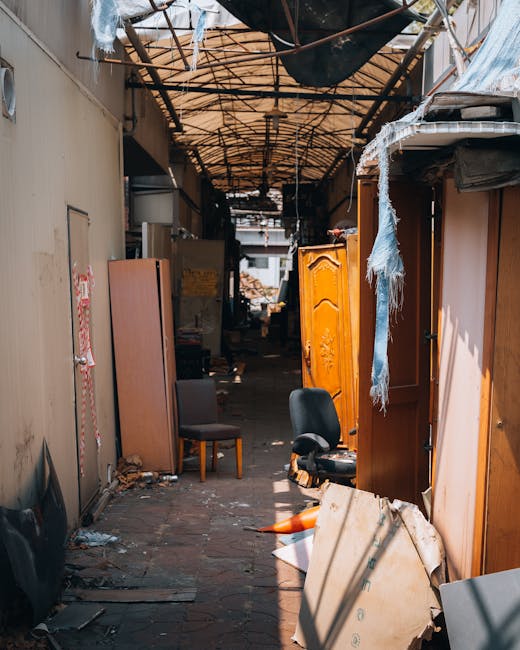
Bulky Waste Removal in Rayners Lane: Costs & Solutions
Posted on 18/06/2026

Bulky Waste Removal in Rayners Lane: Costs & Solutions
Bulky waste has a habit of creeping up on people. One week it is an old sofa in the spare room, the next it is a mattress, a broken wardrobe, a fridge that nobody wants to move, and a garden table that has seen better days. If you are trying to sort out Bulky Waste Removal in Rayners Lane: Costs & Solutions, the real question is usually simple: what is the easiest, safest, and most cost-effective way to get it gone without turning your weekend into a wrestling match?
This guide breaks down the practical options, the likely cost factors, and the situations where professional help makes the most sense. It also covers local realities that matter in a built-up London area like Rayners Lane: tight access, parking headaches, shared entrances, and the general joy of discovering that the item you need to move is heavier than it looked. Truth be told, that is pretty common.
By the end, you will know how bulky waste removal typically works, what drives the price, how to prepare, and how to avoid the mistakes that make the job slower, riskier, or more expensive than it needs to be.
Why Bulky Waste Removal in Rayners Lane: Costs & Solutions Matters
Bulky waste is not just "big rubbish". It is the awkward stuff that does not fit neatly into a standard bin bag, and often cannot be safely carried out by one person. Think sofas, armchairs, wardrobes, white goods, broken desks, bed frames, exercise equipment, or heavy boxes of old books that somehow became a small-scale home library. If it is too large, too heavy, or too awkward to handle without proper planning, it belongs in the bulky waste conversation.
In Rayners Lane, this matters for a few local reasons. Streets can be busy, parking is not always generous, and many homes have stairs, narrow hallways, or shared access. A perfectly simple job can become tricky very quickly if you have to carry a large item down a tight landing or out to a van parked a fair distance away. You notice this most on moving day, when the room is already empty and the item suddenly looks twice its size.
It also matters because the wrong disposal approach can create avoidable costs. If you guess on size, underestimate lifting effort, or leave the job until the last minute, you may end up paying more for rushed help. Or worse, you may injure yourself or damage walls, floors, or door frames. Let's face it, nobody wants a cheap clearance that ends with a scuffed staircase and a sore back.
On the positive side, bulky waste removal done properly saves time, reduces stress, and keeps your home or property usable again. It can also support decluttering before a move, post-tenant clearances, office refreshes, or a simple "we need this space back" moment. For anyone planning a move, a clear-out often pairs well with simple steps to declutter before moving and can make the rest of the process feel much lighter.
How Bulky Waste Removal in Rayners Lane: Costs & Solutions Works
The process is usually more straightforward than people expect, but it works best when you know what to provide upfront. In most cases, bulky waste removal starts with a list or photo of the items. That helps determine whether the work is a small single-item collection, a multi-item clearance, or something that needs additional handling, loading time, or a larger vehicle.
A provider will usually consider:
- the number of items
- the size and weight of each item
- whether the items need dismantling
- how easy it is to access the property
- how far the items need to be carried
- whether disposal, reuse, or recycling is needed
That last point matters more than people think. One item might be suitable for reuse, another may need specialist recycling, and another may be treated as general bulky waste. The more clearly you describe what needs removing, the more accurate the quote is likely to be.
Costing can be shaped by labour time, vehicle size, loading difficulty, and disposal route. A sofa on the ground floor with parking outside is a very different job from a large wardrobe on the third floor with a tight stairwell and no lift. Same item, different job. That is why "how much does it cost?" is never just one number.
If the bulky items are part of a wider house clear-out, the removal may be bundled with other moving support. Some people use a service alongside furniture removals in Rayners Lane or even broader removal services in Rayners Lane when they need more than a basic uplift. That is often the more practical route if the job has a few moving parts.
Key Benefits and Practical Advantages
The main benefit is simple: you get rid of the bulky items without having to improvise. But the real advantages go a bit deeper than that.
- Safer handling: heavy items are less likely to cause back strain, trapped fingers, or accidental damage when handled by people used to moving awkward loads.
- Less disruption: the job can usually be completed in one visit rather than stretched across several trips.
- Better organisation: clearing bulky waste can open up space for decorating, storage, letting the property, or moving house.
- More predictable planning: a fixed collection window and clear quote make it easier to organise the rest of your day.
- Cleaner finish: removing old furniture and broken items often gives a room an immediate reset. You can almost hear the space breathe, if that is not too dramatic.
There is also a practical financial benefit. A careful, transparent quote can be cheaper than people expect once you compare it with the hidden costs of DIY disposal: van hire, fuel, time off work, parking headaches, lifting risk, and the possibility of making two or three journeys because the load was bigger than planned. If you want a better sense of quote structure and what usually affects price, transparent removal quotes for Rayners Lane homes is a useful read.
In some cases, bulky waste removal also supports a quicker turnaround on a property. That is especially relevant if you are preparing for new tenants, renovation work, or a last-minute handover. Time is often the bigger cost, not the removal itself.
Who This Is For and When It Makes Sense
This kind of service suits far more people than just those doing a full house clearance. In fact, a lot of requests come from very ordinary situations.
- Homeowners replacing furniture, clearing garages, lofts, or spare rooms
- Tenants who need to clear items before moving out
- Landlords dealing with abandoned furniture or end-of-tenancy clearances
- Students leaving behind bulky items after term ends
- Small businesses disposing of desks, chairs, filing cabinets, or office furniture
- Families handling bereavement clearances or inherited items
It makes sense when the item is too large for your car, too heavy for one person, or simply not worth the physical effort and time to remove yourself. It also makes sense if the item needs to be taken from a tricky location. A sofa at the bottom of a front room is manageable. A sofa wedged around a corner staircase in an upper-floor flat? Different story.
For anyone living in a smaller property, especially near transport links or busier roads, clearance work often needs a tighter plan. That is why people arranging flat removals in Rayners Lane or working through the logistics of a move near the station often ask for bulky item removal at the same time. It just keeps everything aligned.
And if you are in a hurry, same-day help may be appropriate for urgent clear-outs. There is a sensible middle ground between living with the clutter and panic-booking the first option you see. More on that later.
Step-by-Step Guidance
If you want the smoothest result, treat bulky waste removal as a small project rather than a last-minute chore. A little structure makes a big difference.
- List everything you want removed. Be specific. "Old sofa, broken bedside cabinet, two chairs, and a mattress" is far better than "some furniture".
- Check whether items can be reused, sold, or donated. If they are still usable, you may prefer to keep them out of the waste stream entirely.
- Measure the biggest items. Width, height, and depth matter, especially for wardrobes, wardrobes with mirrors, and large mattresses.
- Look at access. Note stairs, lifts, narrow corridors, garden paths, parking restrictions, and any awkward turns.
- Take photos. A few clear pictures often help more than a long description.
- Ask for a quote based on the full job. Make sure the quote covers loading, carry distance, and any dismantling if needed.
- Prepare the area. Move smaller obstacles away so the team can work efficiently and safely.
- Confirm timing. If parking is limited, schedule carefully so the van can get as close as possible.
- Keep important items separate. This sounds obvious, but it is easy to lose track of things during a clear-out.
There is a useful crossover here with moving advice. If you are decluttering before a larger move, the same planning habits help. A good example is using essential packing tips for a smooth house move and pairing them with a clear-out plan before removal day.
One simple rule: the fewer surprises on the day, the better the price and the easier the job. Surprises are fun at birthdays. Not so much with a wardrobe.
Expert Tips for Better Results
A few practical habits can save real time and reduce cost. These are the kinds of details that tend to make the difference between a smooth collection and a slightly chaotic one.
- Sort by handling difficulty, not just by item type. A lightweight but bulky item can be trickier than a smaller heavy one.
- Disassemble where sensible. If a bed frame or table can be broken down safely, that often makes transport easier.
- Keep pathways clear. Shoes, boxes, and loose rugs are all small trip hazards that become a bigger issue when moving large items.
- Think about floor protection. Old furniture can scrape wood or chip paint on the way out.
- Be honest about condition. Damaged, damp, or partially broken items often need a different handling approach.
If you are dealing with large items during a move, some of the best advice overlaps with handling technique. Articles like how kinetic lifting can transform your moves and methods for solo lifting success are useful reminders that body position matters more than people assume. Bad lifting is where little jobs become big problems.
Also, think in terms of sequences. Remove the easiest, cleanest items first, then the awkward ones. That keeps the work flowing and prevents a pile-up in the hallway. A small thing, but it really helps.

Common Mistakes to Avoid
Most bulky waste headaches come from avoidable mistakes. A few are very common.
- Underestimating size and weight. A "simple" sofa can still require two people, especially if it needs to be angled through a tight space.
- Forgetting access issues. Parking, staircases, and shared entrances all affect how long the job takes.
- Leaving the job too late. Last-minute bookings can reduce your options and increase cost.
- Mixing waste with items you still need. During a clear-out, it is surprisingly easy to send the wrong thing out by mistake.
- Trying to carry the load alone. Solo lifting sounds economical until it is not. It can be a false economy.
- Assuming every item is treated the same. White goods, upholstered furniture, and mixed household waste may not follow the same handling route.
If your bulky waste is part of a broader move or end-of-tenancy clear-out, it is worth reading about house moving made simple and stressfree before you begin. The same planning mistakes show up again and again, just in different clothes.
And yes, people do still leave the mattress blocking the doorway until the van arrives. Every week. Somehow.
Tools, Resources and Recommendations
You do not need specialist equipment for every bulky waste job, but a few basic tools and a good plan help a lot.
- Measuring tape: useful for checking whether an item can pass through doors and hallways.
- Protective gloves: helpful for dirty, rough, or splintered items.
- Furniture sliders or blankets: these can reduce floor damage during short moves inside the property.
- Basic tools: screwdrivers and an Allen key can help with dismantling beds or modular furniture.
- Strong tape or straps: useful for keeping parts together once items are broken down.
On the planning side, local moving resources matter too. If your clear-out is happening alongside a relocation, pages such as man with a van in Rayners Lane, man and van in Rayners Lane, and removal van in Rayners Lane can help you think through the vehicle and labour side of the job. If the schedule is tight, same-day removals in Rayners Lane may be the right fit for urgent clearances.
If you are particularly concerned about your belongings during storage or phased moving, planning ahead also helps protect items that are being kept rather than discarded. For example, safeguard your sofa for duration storage and similar advice can reduce damage when furniture is being held temporarily.
Law, Compliance, Standards, or Best Practice
When bulky waste is removed, the key thing is making sure it is handled responsibly. In the UK, waste must be managed properly, and that means you should be cautious about who takes it away and how it is disposed of. You do not need to become a legal expert, but you do want to avoid handing items to someone who may not deal with waste in a proper way.
As best practice, look for clear communication about what happens to the waste, especially if some items can be reused or recycled. If a provider discusses recycling and sustainability openly, that is a good sign. It shows they are thinking beyond simple uplift and dump.
Health and safety also matters. Heavy lifting, sharp edges, broken furniture, and awkward stair carries all come with risk. Good practice is to use proper lifting technique, keep walkways clear, and avoid unsafe solo handling. If you want reassurance about handling standards, it is worth reviewing health and safety policy and insurance and safety information before booking any removal support.
For people who care about environmental impact, recycling and sustainability is not just a nice extra. It is part of making sure bulky items are handled with less waste where possible. Reuse first, recycle where suitable, dispose only when necessary. That is the sensible order.
If you are comparing providers, it is also wise to check the small print on terms and conditions and payment and security. Not glamorous, I know, but it saves awkward surprises later.
Options, Methods, or Comparison Table
There are usually three main ways to deal with bulky waste. Which one makes sense depends on the item, the timeline, and how much lifting you want to do yourself.
| Method | Best for | Typical advantages | Things to watch |
|---|---|---|---|
| DIY disposal | Very small jobs with easy access | Can seem cheaper if you already have transport and help | Heavy lifting, van hire, time, parking, and possible damage |
| Council-style bulky collection or local collection point | Limited items and non-urgent clear-outs | Useful for straightforward disposal planning | May involve waiting, item limits, or strict preparation rules |
| Professional bulky waste removal | Mixed loads, awkward items, stairs, urgent jobs, or larger clearances | Fast, safer, less hassle, better for access problems | Price varies with volume, access, and handling difficulty |
For a lot of Rayners Lane households, the professional route is the most practical because it folds together labour, loading, and transport in one go. That is especially true for mixed loads where one item is light but bulky, another is too awkward to lift alone, and the third is a bit of both. The job is never just the obvious item. There is always a chair or side table lurking nearby.
If your clear-out is linked to a property move, it can help to compare bulky waste removal with broader moving support such as removals in Rayners Lane or removal companies in Rayners Lane. That way you can decide whether one combined booking is simpler than several separate jobs.
Case Study or Real-World Example
Here is a realistic example. A small flat in Rayners Lane has a two-seater sofa, a broken bookshelf, a mattress, and a disassembled dining table that has been sitting in a spare room for months. The resident originally thought it would all fit in a few car trips. Then they measured the sofa. Then they looked at the stairwell. Then they realised the mattress alone was going to be annoying, and the sofa was the real problem.
Instead of trying to manage the whole thing piecemeal, they took photos, listed the items, and asked for a quote that included loading and carry access. They cleared the hallway, moved smaller items out of the way, and made sure parking would be possible outside for the collection slot. The actual uplift was done in one visit, and the room was usable again by lunchtime. A very ordinary win, but an important one.
What made the difference? Not magic. Just clarity. They did not oversell the job, and they did not hide the awkward bits. That meant the plan matched the reality on site. If the same household had left everything until moving day, they would probably have paid more, stressed more, and spent the evening regretting their life choices over a takeaway.
This is also where a pre-move clean-up can help. A quick reset before collection, like the approach in transform your home with a premove cleaning routine, makes the property easier to hand over and easier to live in while things are in motion.
Practical Checklist
Use this before you book or on the day itself. It keeps the process tidy and avoids the usual last-minute scramble.
- List every bulky item clearly
- Measure the largest pieces
- Take photos of the items and the access route
- Check for stairs, lifts, or narrow corners
- Confirm parking space if needed
- Separate items that must not go
- Dismantle safe, simple items in advance
- Clear walkways and protect floors if needed
- Ask what the quote includes
- Keep contact details handy in case timing changes
If your bulky waste removal is part of a move involving fragile, heavy, or seasonal items, it can also help to look at related preparation guides such as how to relocate your bed and mattress safely and safeguarding your freezer during prolonged disuse. The more you prepare, the less likely something useful gets damaged or forgotten.
Small note, but an important one: if you are feeling rushed, stop and reset for five minutes. A calmer plan almost always beats a frantic one.
Get a free quote today and see how much you can save.
Conclusion
Bulky waste removal in Rayners Lane is one of those jobs that looks simple from a distance and then gets complicated the moment you actually start moving things. Costs depend on the size of the load, the access to your property, the amount of lifting required, and how quickly you need it done. The good news is that with a clear list, a few measurements, and the right support, the process becomes much easier to manage.
If you are clearing one awkward item or a whole room full of furniture, the best approach is usually the one that keeps you safe, saves time, and gives you a clean finish without unnecessary stress. That is really the whole point, isn't it?
A well-planned clear-out can make a home feel lighter in a way that is hard to describe until you see it for yourself. And once the bulky stuff is gone, the rest of the room has room to breathe.