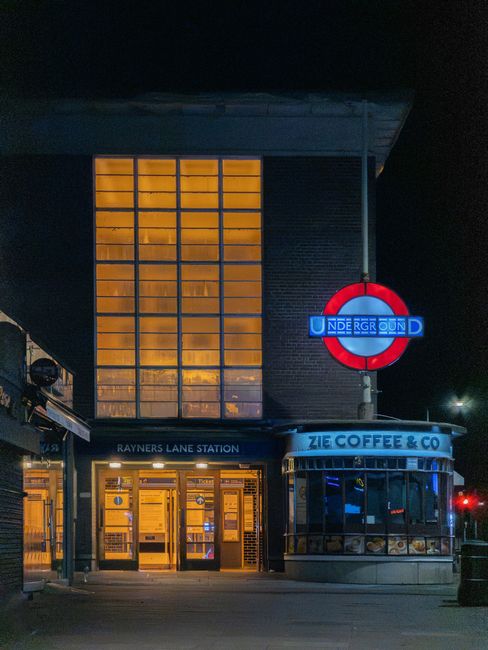
How a Rayners Lane Cafe Moved Overnight: A Real Job
Moving a cafe is never just about shifting tables and boxes. There are fridges humming in the corner, coffee machines with delicate fittings, stock that has to stay cold, and a trading day that still needs to happen tomorrow. That is why How a Rayners Lane Cafe Moved Overnight: A Real Job is such a useful example: it shows how a busy small business can relocate without turning the move into a week-long headache. Done well, an overnight move protects the stock, avoids lost trading hours, and gets the doors open again with the least possible fuss.
This article breaks the move down in a practical way. You will see why an overnight cafe relocation matters, how the process works, what to plan for, and the mistakes that can trip people up. There is also a real-world example, a useful checklist, and a simple comparison of common moving approaches. Nothing fancy. Just the stuff that actually helps when the pressure is on.
Why How a Rayners Lane Cafe Moved Overnight: A Real Job Matters
On paper, a cafe move looks simple. In reality, it is a chain of tiny timing decisions. You are dealing with perishables, fragile equipment, high footfall, and a trading pattern that may not forgive even half a day of downtime. For a local business in Rayners Lane, that matters even more because the surrounding trade often depends on regular customers, office workers, and passing traffic. Miss the rhythm, and the morning rush can be gone before you have even unloaded the first crate.
An overnight move matters because it compresses the disruption into a small window. That is not magic. It just means the old site can close after service, and the new site can be set up before the next opening time. The goal is continuity. Customers may only see a shutter down at night and an open sign the next day, but behind that clean handover there is usually a careful plan, a few stressed people, and a lot of lifting.
To be fair, many owners underestimate the hidden complexity. A cafe is not a standard office. It has food safety concerns, awkward appliances, awkward stairs, and the odd item you forgot about until the van is already loaded. Espresso machines alone can be a small world of hoses, filters, and removable parts. And yes, the milk fridge needs more care than the chair stack. A proper business move treats those items differently, which is why commercial moves are usually planned with more detail than a home move.
There is also the customer trust angle. People notice when a local cafe stays tidy, predictable, and open on time. If you are moving into a new frontage or a slightly different nearby location, a smooth overnight relocation helps preserve that sense of reliability. In a local area like Rayners Lane, word travels quickly. The good kind and the bad kind.
How How a Rayners Lane Cafe Moved Overnight: A Real Job Works
An overnight cafe move works by splitting the job into three parts: preparation before the move, the physical relocation itself, and the reset at the new site. The better these stages are planned, the less chance there is of one small delay becoming a big problem at 5:30 in the morning.
The preparation stage normally starts days before the actual move. Stock is reduced, consumables are packed, equipment is checked, and anything that needs a specialist disconnect is handled early. At this point, a good mover will usually ask questions most people forget to think about: where is the loading access, what time can the vehicle get close, which items need two people, and what must be reinstalled first?
The move itself is often done in a tight sequence. Non-essential items go first, fragile items are wrapped and loaded carefully, and the heaviest appliances are kept stable in the van. A well-managed move uses clear labels and a set order. For example, the till, card reader, and menu boards may be packed separately so the front counter can be rebuilt quickly. That saves time when everyone is a bit tired and the kettle is somehow still the most important thing in the room.
At the destination, the priority is function over perfection. The cafe does not need to look finished before it can start trading again; it needs to work. Counters, power points, fridges, and service flow come first. Decoration can wait a little. Customers will forgive a picture being hung later. They will not forgive a broken opening routine.
If the cafe uses a more structured relocation partner, such as removal services or even a smaller man with van style move for lighter equipment, the plan still needs the same logic: sequence, safety, and speed. Different vehicle sizes and crew sizes simply change how that sequence is carried out.
Key Benefits and Practical Advantages
There are several reasons business owners choose an overnight cafe move rather than trying to close for a full day or two. Some are obvious. Some only become obvious when you are halfway through stacking crates at 11:40 p.m. and realise the milk steamer is heavier than expected.
- Less lost trading time: A successful overnight move keeps disruption away from peak hours.
- Better customer continuity: Regulars are less likely to drift elsewhere if the closure is brief and well managed.
- Lower spoilage risk: Fast transfer of chilled or temperature-sensitive stock helps protect value.
- Cleaner handover between sites: Staff can close one location and reopen the next without an awkward gap.
- More control over access: Night-time loading can sometimes be simpler than daytime movement, especially in busier streets.
- Reduced stress during opening hours: Your team can focus on service rather than watching a van outside all morning.
One practical advantage people often miss is morale. If a move is handled neatly, staff feel looked after. That sounds soft, but it matters. A team that arrives to a ready counter, working refrigeration, and clear stock locations is much more likely to start the day well. And in hospitality, that first hour can set the tone for the whole shift.
There is also a brand benefit. A cafe that moves overnight and opens without drama sends a clear message: organised, dependable, and on the ball. Not flashy. Just solid. That counts for a lot.
Who This Is For and When It Makes Sense
This kind of move makes sense for cafe owners who cannot afford a long closure, especially those with established local trade or a fixed reopening date. It is also a smart choice if you are moving a small independent coffee shop, a bakery-cafe hybrid, or a takeaway counter with seating. Any business with chilled stock, compact kitchen equipment, and a need to reopen fast can benefit from this approach.
It is not only for full site relocations either. Sometimes a business is moving across the road, into a new unit nearby, or swapping to a different part of the same parade. In those cases, the overnight window can be enough to move stock, furniture, and front-of-house items while keeping the outage tiny.
It makes the most sense when:
- you have a firm reopening time the next day;
- you can reduce stock the day before;
- your equipment can be safely disconnected and reconnected in stages;
- the new site is ready for power, access, and layout placement;
- you have enough hands on deck for loading and unloading.
It is less suitable when the new unit still needs major works, the equipment is highly specialised, or the old site is packed with stock that cannot be reduced in advance. In those cases, a phased move may be safer. Sometimes the sensible answer is not speed for speed's sake. It is simply better sequencing.
Step-by-Step Guidance
If you are planning a similar cafe relocation, the following approach keeps things grounded. It is simple, but simple done well is usually what saves the night.
- Confirm the move window. Decide exactly when the old site closes and when the new site must be ready. Leave a realistic buffer. Rushing is how people forget the obvious things.
- Create an item list. List every significant piece: fridges, coffee machine, grinder, tables, shelving, till, signs, stock, and cleaning products. Small items still add up fast.
- Separate essentials from non-essentials. What must be live at opening time? What can be set up later? That distinction keeps the move focused.
- Reduce perishables early. Use as much stock as possible before the move and avoid carrying unnecessary chilled goods overnight.
- Label everything clearly. Put each box or crate into a category such as front of house, kitchen, cleaning, admin, or display.
- Protect fragile equipment. Use proper wrapping, padding, and stable loading. A wobbling machine in a van is not a fun story later.
- Check access at both ends. Measure doors, stairs, corridor turns, and vehicle access. The van only fits if it actually fits.
- Load in reverse order. Put first-use items near the front of the unloading sequence so they come out first at the new site.
- Rebuild the trading core first. Priority should go to power, counter setup, hot drinks, chilled storage, and till systems.
- Do a final walk-through. Check both premises for forgotten stock, keys, cleaning items, and paperwork. Night moves love surprises. Usually the annoying kind.
If the cafe move also involves larger commercial furniture or redundant items, a service like furniture pick up can sometimes help clear away anything no longer needed before the new site opens. That reduces clutter and makes the destination easier to organise.
Expert Tips for Better Results
Here is where experience really pays off. A move can be technically successful and still feel messy if the planning is weak. These are the details that make the difference.
1. Build the opening day backwards. Start with the first thing customers will see in the morning and work backwards from there. Can the front counter be used immediately? Is there milk in the fridge? Are the till and card machine powered? That way of thinking keeps the team focused on service, not just transport.
2. Assign one decision-maker. During a night move, too many opinions slow everything down. One person should have final say on where items go and what gets prioritised. Everyone else can still help, obviously. But the chain of command should be clean.
3. Keep a small "first hour" kit. Include tape, a marker pen, a charger, cleaning cloths, bin liners, key documents, and any must-have opening items. It is the bit everyone forgets until 6:15 a.m. and then suddenly it matters a lot.
4. Protect cash flow by protecting the schedule. Even a one-hour delay can hit a cafe hard if breakfast trade is lost. A move crew that understands time pressure is worth more than one that simply arrives with a van. If you are comparing providers, the right removal company should be able to talk through the order of work, not just the vehicle size.
5. Keep communication short and clear. Overnight moves are tiring. People do not need essays. They need labels, timings, and a simple checklist. Short instructions win at 2:00 a.m. every time.
Common Mistakes to Avoid
Most problems in a cafe relocation are predictable. That is the frustrating part. The good news is they are also avoidable if you know what to watch for.
- Leaving stock reduction too late: Moving full fridges and half-used ingredients increases waste and slows the schedule.
- Underestimating equipment weight: Coffee machines, grinders, fridges, and metal shelving are often heavier than they look.
- Not checking the new site first: The destination must be ready for the load-in, not just "almost ready".
- Poor labelling: Unlabelled boxes create chaos the next morning. It is a tiny mistake with big consequences.
- Forgetting cleaning items and keys: Sounds basic. Happens all the time.
- Using the wrong vehicle: A small job may suit a man and van style setup, but bigger loads may need a more capable moving van or larger crew.
- Skipping insurance checks: If something is damaged in transit, you want to know where you stand before the van is loaded.
Another classic issue is trying to reopen with half the equipment still unconnected. The cafe might look finished, but if the coffee machine is not plumbed in or the fridge is still warming up, you are basically inviting stress to breakfast. Not ideal.
Tools, Resources and Recommendations
You do not need a warehouse full of kit, but the right moving basics make a huge difference. For a local cafe relocation, useful tools usually include strong crates, bubble wrap, furniture blankets, tape, labels, cable ties, a trolley or sack truck, and a basic toolkit for disassembly and reassembly. A few cable markers help more than people expect. So does a permanent marker that has not dried out, which is apparently a luxury item on some move nights.
Useful planning resources are usually simple documents rather than software. A floor plan for the new unit, a labelled inventory, a contact list, and a timeline are often enough. If the job is more complex, packing and unpacking services can save a lot of time, especially where fragile stock or mixed back-of-house items are involved.
For businesses that need extra help choosing the right setup, comparing the practical options between man with van, a larger moving van, or broader removal services can be useful. The best choice depends on volume, access, and how quickly the new site must be operational.
If you are still in the early stages of planning, it also helps to review pricing and quotes so you can match the move to your budget, and to look at insurance and safety before anything is loaded. That is not the exciting part, but it is the part that protects you when the day gets busy.
Law, Compliance, Standards, or Best Practice
A cafe move touches several UK best-practice areas, even if it is only a short local relocation. The most obvious is food hygiene and safe handling. Perishable stock should be treated carefully, temperature-sensitive goods should not be left out unnecessarily, and any items that are no longer safe to use should be discarded rather than risked. In practice, this means planning the move around what can be kept cold, what can be used up beforehand, and what should simply not travel.
Manual handling is another important point. Heavy loads, awkward lifts, and stair carries can all lead to injury if the job is rushed. A sensible mover will work to safe lifting methods, use equipment where needed, and split especially heavy items between two or more people. No one wins by proving they can carry a fridge alone. Well, except maybe their pride, and that does not help much.
Insurance and liability should be discussed before the move, not after. Business owners should know what is covered if equipment is damaged, who is responsible during loading and unloading, and whether any special items need separate attention. It is also wise to check access permissions, parking arrangements, and any local restrictions at both properties. Even a small delay at the loading point can unravel a tight overnight schedule.
Where electrical appliances, gas fittings, or plumbed equipment are involved, use appropriately qualified professionals where required. It is better to pause for a proper disconnect and reconnect than to bodge the job and regret it at opening time. Truth be told, the most professional move is often the one that looks a little boring because everything went to plan.
For business owners who want to understand the wider standards and company approach behind a move, it can also help to review the provider's health and safety policy, terms and conditions, and recycling and sustainability commitments. Those pages show how a mover thinks about risk, responsibility, and disposal.
Options, Methods, or Comparison Table
Not every cafe relocation needs the same setup. The right method depends on the size of the move, the amount of stock, and how quickly you need to reopen. Here is a practical comparison.
| Move method | Best for | Strengths | Watch-outs |
|---|---|---|---|
| Man and van | Smaller cafe moves, short distances, light equipment | Flexible, efficient, often well suited to local access | May be too small for larger fridges or full shop fittings |
| Moving van or larger vehicle | Medium-sized cafe relocations with more stock and furniture | More capacity, fewer trips, faster load-out | Needs better access planning and lifting coordination |
| Full removal services | Busy businesses, multiple large items, tight overnight timetable | More structured, often easier to manage end-to-end | Can be more involved to plan, so communication matters |
In simple terms, smaller jobs lean toward flexibility, medium jobs need more capacity, and larger cafe relocations benefit from a more formal structure. If you are unsure, it is usually better to choose the option that gives you a bit of breathing room rather than the absolute cheapest one. A move with no margin is a stressful move. Ask anyone who has had to move a blender at midnight while also hunting for the till key.
Case Study or Real-World Example
Here is a realistic version of how a Rayners Lane cafe relocation can unfold.
The cafe had a loyal morning crowd, so closing for a full day would have meant losing regular trade and risking a rough restart. The owners wanted to move a short distance to a better unit with improved frontage and easier customer flow. The challenge was simple on the surface: get everything out of the old site after closing and make the new site workable before the next opening.
The team began by trimming stock two days before the move. Fresh items were used up in service, non-essential display pieces were packed early, and the back counter was cleared in stages. On the evening itself, the small items went first, followed by tables, chairs, and then the heavier equipment. The coffee machine was wrapped carefully, labelled as a priority item, and kept separate from general boxes. That small detail saved time the next morning.
By around midnight, the first van load had reached the new site. The layout had already been agreed, so there was no debate about where the counter should sit or which fridge went where. That made the work feel calmer. Not easy, exactly. But calmer. By dawn, the essentials were in place: power, refrigeration, the till, and the main service station. The team still had a few finishing bits to do, but the cafe could open on time.
The lesson was not that everything went perfectly. It rarely does. The lesson was that the move stayed controlled because the basics were done properly: reduction of stock, clear labelling, sensible vehicle choice, and a good order of work. That is what makes the difference between a neat overnight relocation and a very long night.
Practical Checklist
Use this checklist if you are planning a similar move. It is intentionally practical, not decorative.
- Confirm the closing time at the old site and opening time at the new site.
- Write a full inventory of furniture, appliances, stock, and admin items.
- Reduce perishable stock as much as possible before moving day.
- Label every crate, box, and cable bundle clearly.
- Measure entrances, stairways, and vehicle access at both locations.
- Protect fragile equipment with proper wrapping and padding.
- Separate opening-critical items from items that can be installed later.
- Check insurance, terms, and safety arrangements in advance.
- Prepare a first-hour kit with essential tools and documents.
- Assign one person to make final decisions during the move.
- Confirm the destination is clean, powered, and ready to receive stock.
- Do a final sweep of the old unit before locking up.
Quick takeaway: the smoothest cafe moves are not the fastest by accident; they are the fastest because the order was right from the start.
Get a free quote today and see how much you can save.
Conclusion
How a Rayners Lane Cafe Moved Overnight: A Real Job is really a lesson in good planning under pressure. A cafe move only looks simple until you start dealing with stock, access, safety, equipment, and the need to reopen on time. Then every small decision matters. The good news is that with a clear order of work, the right vehicle, careful handling, and a bit of local know-how, an overnight move can be smooth, efficient, and surprisingly calm.
If you are preparing a cafe relocation of your own, focus on the essentials first: reduce what you carry, protect what matters, and make the new site ready before the first box arrives. Do that well, and the next morning feels a lot less like a gamble. More like a fresh start, which is what a good move should be.
Frequently Asked Questions
Can a cafe really be moved overnight?
Yes, if the move is planned properly and the distance, stock volume, and equipment setup are manageable. Overnight works best for short local moves where the cafe can close after service and reopen the next day with a limited gap.
What is the hardest part of moving a cafe?
The hardest part is usually the combination of fragile equipment, perishable stock, and time pressure. Any one of those is manageable. Together, they need a clear plan.
How far in advance should a cafe move be planned?
As early as possible. Even a local move benefits from several days of preparation so you can reduce stock, label items, check access, and avoid last-minute surprises.
Do I need a large van for a cafe relocation?
Not always. It depends on the volume of equipment and furniture. A smaller move may work with a compact setup, while a larger relocation may need a bigger vehicle or more than one trip.
What should be moved first in a cafe?
Move the non-essential items first, then the fragile and priority items in a controlled sequence. At the new site, the essentials should be rebuilt first: refrigeration, power, till systems, and the service counter.
How do I protect coffee machines and fragile appliances?
Use proper wrapping, padding, and secure positioning in the vehicle. Keep hoses, removable parts, and accessories packed separately and clearly labelled.
Is it better to use removal services or a man and van setup?
That depends on the size and complexity of the job. Smaller cafe moves may suit a flexible setup, while larger or more demanding jobs often benefit from fuller removal services.
What compliance issues matter most in a cafe move?
Food safety, manual handling, insurance, access arrangements, and safe handling of equipment are the main concerns. If electrical, gas, or plumbed items are involved, use qualified professionals where needed.
How can I keep the cafe open again quickly after the move?
Build the opening around the essentials: power, refrigeration, till setup, and the customer-facing counter. Keep the first-hour kit ready and avoid burying priority items in mixed boxes.
What is the biggest mistake owners make during an overnight move?
Trying to move too much without enough preparation. That usually means poor labelling, delayed loading, and missing items when the new site needs to open.
Should I tell customers about the move in advance?
Yes, absolutely. A brief notice helps manage expectations and protects your regular trade. Clear communication is one of the easiest wins in any local business move.
Can a local move still go wrong if it is short?
Definitely. Short distance does not mean simple. Access issues, parking restrictions, heavy equipment, and poor timing can still cause delays. Local does not automatically mean easy.
What should I check before choosing a mover?
Look at experience with commercial moves, insurance, safety arrangements, pricing clarity, and how well they explain the loading sequence. A good provider should sound organised, not vague.
How do I know if my cafe move needs professional help?
If you have heavy appliances, tight timing, fragile stock, or a reopening deadline, professional help is usually worth considering. It often saves time, stress, and avoidable damage.